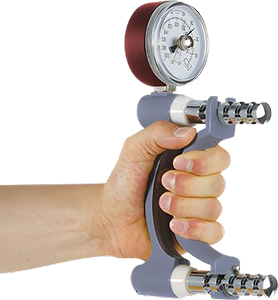
Maximal Grip Strength
A proven, trusted indicator of overall muscle strength and a key criterion for sarcopenia and frailty.
Advance your research with a validated, patient-centric system for monitoring muscle health and vitality. Eforto® provides objective, high-frequency data to enhance trial efficiency, sensitivity, and the quality of your outcomes.
Clinical trials in geriatrics, neurology, and chronic disease management face a significant challenge: the lack of sensitive, objective, and reliable outcome measures to track disease progression and therapeutic response.
Traditional assessments are often infrequent and burdensome for participants and may miss subtle but clinically meaningful changes.
There is a clear need for validated digital health technologies that allow for objective, remote monitoring of function, providing richer data between clinic visits and capturing real-world patient status
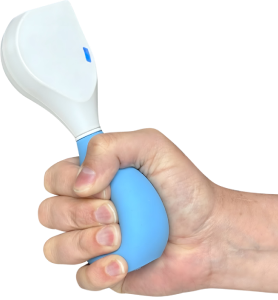
Eforto® is a complete system designed for the rigorous demands of clinical research. Our patented pneumatic vigorimeter, guided mobile app, and secure data platform empower you to capture validated biomarkers of neuromuscular function and vitality capacity with exceptional ease and precision.
Move beyond subjective scales. Eforto® measures objective, WHO-aligned biomarkers for vitality capacity, including:
A proven, trusted indicator of overall muscle strength and a key criterion for sarcopenia and frailty.

A more sensitive biomarker than grip strength alone, shown to be more responsive to interventions and strongly correlates with inflammation and functional decline.

A novel, clinically validated measure that combines objective endurance with subjective fatigue to detect pre-frailty with high accuracy.

Our team is continuously working with research partners to validate and add new, nuanced biomarkers of muscle function. We can work with you to incorporate experimental and advanced metrics into your protocol, including:
To assess muscle power and explosive strength.
To analyze muscle control and relaxation properties.

To compare strength between limbs, critical for neurological and orthopedic studies.

To evaluate the coordination of both hands.

To measure submaximal control and motor stability.

To quantify tremors during exertion using integrated sensors.

Reduce participant burden and increase data density. Eforto® is 5-minute, self-guided test can be performed by participants at home, allowing for daily or weekly data collection that is impossible with traditional clinic-based tests. This provides a more granular view of disease progression or treatment effects.
High-frequency, objective data can increase the statistical power of your studies, potentially allowing for smaller sample sizes or shorter trial durations. By capturing sensitive changes in muscle fatigability, you may detect a therapeutic signal earlier than with traditional endpoints.
The Eforto® system is designed for ease of use, even for frail individuals. The interactive app guides participants through the validated protocol, and the ability to see their progress can enhance motivation and long-term adherence to the study protocol.
We understand that every study is unique. The Eforto® platform is a configurable solution designed for flexibility, allowing you to build custom protocols that precisely match your research objectives. Go beyond standard metrics and integrate bespoke electronic Patient-Reported Outcomes (ePROs) and an expanding list of advanced biomarkers.
Eforto® was developed in collaboration with leading academic partners and validated in multicenter clinical trials. Our platform is built to meet the needs of modern research.
Eforto® is already being used by leading research institutions and is a key component of international studies, including collaborations with the World Health Organization (WHO).
Whether your focus is on frailty, sarcopenia, neuromuscular disease, post-surgical recovery, or the impact of nutritional and pharmacological interventions, Eforto® provides the validated, patient-centric endpoints you need.
McDowell, T.W., Wimer, B.M., Welcome, D.E., Warren, C. and Dong, R.G., 2012. Effects of handle size and shape on measured grip strength. International Journal of Industrial Ergonomics, 42(2), pp.199–205.
Lee, J.K., Jung, M., Lee, H.B., Chung, H.J. and Lee, S.H., 2024. Reliability and validity of the Martin Vigorimeter for grip strength measurement in Korean adults. Clinics in Orthopedic Surgery, 16(4), p.610.
Neumann, S., Kwisda, S., Krettek, C. and Gaulke, R., 2017. Comparison of the grip strength using the Martin-Vigorimeter and the JAMAR-dynamometer: establishment of normal values. In Vivo, 31(5), pp.917–924.
Draak, T.H., Pruppers, M.H., Van Nes, S.I., Vanhoutte, E.K., Bakkers, M., Gorson, K.C., Van der Pol, W.L., Lewis, R.A., Notermans, N.C., Nobile‐Orazio, E. and Léger, J.M., 2015. Grip strength comparison in immune‐mediated neuropathies: Vigorimeter vs. Jamar. Journal of the Peripheral Nervous System, 20(3), pp.269–276.
Gränicher, P., Maurer, Y., Spörri, J., Haller, B., Swanenburg, J., de Bie, R.A., Lenssen, T.A. and Scherr, J., 2024. Accuracy and reliability of grip strength measurements: A comparative device analysis. Journal of Functional Morphology and Kinesiology, 9(4), p.274.
Desrosiers, J., Hébert, R., Bravo, G. and Dutil, E., 1995. Comparison of the Jamar dynamometer and the Martin vigorimeter for grip strength measurements in a healthy elderly population. Scandinavian Journal of Rehabilitation Medicine, 27(3), pp.137–143.
De Dobbeleer, L., Theou, O., Beyer, I., Jones, G.R., Jakobi, J.M. and Bautmans, I., 2018. Martin Vigorimeter assesses muscle fatigability in older adults better than the Jamar dynamometer. Experimental Gerontology, 111, pp.65–70.
Knoop, V., Costenoble, A., Debain, A., Azzopardi, R.V., Vermeiren, S., van Laere, S., Jansen, B., Scafoglieri, A., Bautmans, I., Verté, D. and Beyer, I., 2021. The interrelationship between grip work, self-perceived fatigue and pre-frailty in community-dwelling octogenarians. Experimental Gerontology, 152, p.111440.
Bautmans, I., Gorus, E., Njemini, R. and Mets, T., 2007. Handgrip performance in relation to self-perceived fatigue, physical functioning and circulating IL-6 in elderly persons without inflammation. BMC Geriatrics, 7(1), p.5. DOI: 10.1186/1471-2318-7-5
Bautmans, I., Knoop, V., Thiyagarajan, J.A., Maier, A.B., Beard, J.R., Freiberger, E., Belsky, D., Aubertin-Leheudre, M., Mikton, C., Cesari, M. and Sumi, Y., 2022. WHO working definition of vitality capacity for healthy longevity monitoring. The Lancet Healthy Longevity, 3(11), pp.e789–e796.
Nikodelis, T., Savvoulidis, S., Athanasakis, P., Chalitsios, C. and Loizidis, T., 2021. Comparative study of validity and reliability of two handgrip dynamometers: K-force grip and Jamar. Biomechanics, 1(1), pp.73–82.
University Hospital Southampton NHS Foundation Trust, 2019. Procedure for measuring grip strength using the JAMAR dynamometer [Standard operating procedure]. Southampton Biomedical Research Centre.
Eforto®, 2025. Eforto-M1 Vigorimeter instruction manual (v1.01) [Instruction manual].
De Dobbeleer, L., Swart, M.M., Geerds, M.A.J., Baggen, R.J., Jansen, A.J.S., Tielemans, R., Silva, H., Lieten, S., Barbé, K., Peeters, G. and Vollenbroek-Hutten, M.M.R., 2023. Validity and reliability of Eforto®, a system to (self-)monitor grip strength and muscle fatigability in older persons. Aging Clinical and Experimental Research, 35(4), pp.835–845.