Eforto® Frailty Assessment

A comprehensive physical frailty assessment guided by your physical therapist.

The Eforto® Frailty Assessment provides a complete, guideline-based evaluation of physical frailty in just 60 minutes, using the digital and standardised Eforto® Frailty Protocol.

Designed for physiotherapists, longevity clinics, and nursing homes, this protocol combines validated physical testing, clinically relevant screening questionnaires, and a personalised evidence-based report that recommends targeted interventions such as exercise and nutrition.

If the Eforto® Vitality test protocol  signals a drop in vitality capacity, clinicians can seamlessly follow up with a full Eforto® Frailty Assessment. This comprehensive evaluation delivers a detailed view of a patient’s physical resilience. Combined, the two test protocols enable earlier identification of vulnerability, more targeted interventions, and reliable long-term monitoring.

Why Frailty Assessment?

Frailty is the main barrier for healthy ageing. About 50% of persons above 60 are in a pre-frail or frail condition.1 Frailty makes them less likely to recover from health stressor:2

  • 1.8 x higher risk for hospitalization
  • 2.0 x higher risk for loss of activities of daily living
  • 2.6 x higher risk for physical limitation
  • 2.8 x higher risk for falls and fractures
  • 2.3 x higher risk for mortality

Early identification and targeted intervention can slow down or even reverse decline. However, traditional frailty assessments often lack standardisation or objective measurement. Eforto® changes this by providing:

  • Standardised physical frailty screening
  • Quantified measurements following validated testing protocols
  • Actionable insights to shape treatment plans
  • Guideline-based recommendations for healthy ageing

The Eforto® Frailty Assessment empowers clinicians to detect pre-frailty early - even in high-functioning adults - before it leads to major functional issues.3
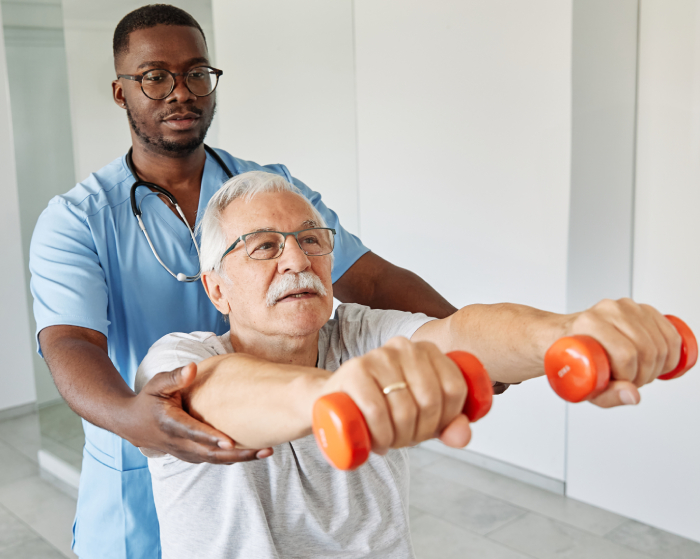

Why Frailty Assessment

How It Works

1

Subject_Info_icon

Intake & Patient
Creation

The physiotherapist performs an intake conversation, confirms consent, and prepares the patient record by entering subject information such as gender, date of birth and weight via the Eforto mobile app or Eforto Metrics platform.

2

Frailty Screening_icon

Frailty
Screening

Guided by the physiotherapist, the patient completes a comprehensive test battery of validated physical and questionnaire-based frailty assessments.

3

Report_Advice

Report &
Advice

Eforto® instantly generates a comprehensive, clear, and personalised Frailty Assessment Report, including:

  • Overall frailty status
  • Guideline-aligned “traffic light” scores for each biomarker
  • Evidence-based lifestyle and physiotherapy recommendations

4

Optional_Retesting_icon

Follow-up &
Monitor

Patients can return periodically to their physiotherapist for follow-up assessments to:

  • Track functional changes
  • Detect decline early
  • Evaluate the impact of physiotherapy, nutrition, or exercise interventions
  • Update care plans based on measurable progress

Benefits

  • Comprehensive physical frailty evaluation in 60 minutes
  • Ideal as a detailed assessment after a sub-optimal vitality capacity test
  • Clear reporting for patient & multidisciplinary team
  • Clinically actionable insights for physiotherapy training
  • Evidence-based recommendations (exercise, nutrition, etc.)
  • Printable & shareable report
  • Seamless integration into physiotherapy software
  • Supports prevention, longevity strategies & quality of care

Example Use Locations

The lightweight and flexible setup makes it suitable for:

Physiotherapy Practices 1
Physical Therapist Practices

Comprehensive frailty assessment to guide personalised physiotherapy care

Provides objective baselines and clear performance metrics, enabling targeted treatment planning, measurable progress tracking, and improved patient outcomes

Longevity Clinic 1
Longevity Clinics

In-depth functional assessment to personalise healthy-ageing and longevity programs

Delivers clear insights into frailty status and resilience, supporting highly tailored interventions that enhance programme effectiveness and client engagement

Nursing home
Nursing Homes & Assisted Living

Structured assessment to identify vulnerability and mobility decline in residents

Detects at-risk individuals early, guides interventions, and supports interdisciplinary care planning, improving resident safety and care quality

Customizability & Data Privacy

Organizations can tailor the Eforto® Frailty Assessment by choosing which subject fields and data points to record. This flexibility helps clinics and care teams keep the protocol aligned with their existing workflows and documentation needs.

The Eforto® Metrics platform complies with both GDPR and HIPAA. It connects easily to physiotherapy software via a FHIR-based API. As a result, data exchange is smooth, reports are stored automatically, and clinical workflows become more efficient.

“Eforto’s objective approach makes it easier to discuss a resident’s situation with other healthcare professionals by providing one clear, concise summary of their frailty status.”
leiehome-logo
Physiotherapist of LeieHome
(nursing home)

Ready to strengthen your frailty assessment offering?

Bring evidence-based frailty assessment into your physiotherapy practice, longevity clinic, or care organisation.

Deliver a comprehensive 60-minute protocol that transforms early detection and personalised intervention.

List of References

  1. Siriwardhana, D.D., Hardoon, S., et al., 2018. Prevalence of frailty and prefrailty among community-dwelling older adults in low-income and middle-income countries: a systematic review and meta-analysis. BMJ open, 8(3), p.e018195.
  2. Vermeiren, S., Vella-Azzopardi, R., et al., 2016. Frailty and the prediction of negative health outcomes: a meta-analysis. Journal of the American Medical Directors Association, 17(12), pp.1163-e1.
  3. Simonsick, E.M., Schrack, J.A., et al., 2014. Assessing fatigability in mobility‐intact older adults. Journal of the American Geriatrics Society, 62(2), pp.347-351.